


ADVERTISEMENT
Oligonucleotides & Primer Design
- Map Primers on a Sequence
- Analyze Oligonucleotides
- Melting Temperature Formula
- Melting Temperature
- Dimer & Hairpin Structures
- Calculators & Convertors
- Primer Design Tools
- Microarray Primer Design
- Primer Design for multiple DNA species and complexe gene amplifications
- Mutagenesis
- In-Silico PCR
- PCR Guides
- Primer Databases
Melting Temperature Formula
Wallace Method

Tm (in °C) = 2(A+T) + 4(C+G)
  (A+T) - the sum of the A and T residues in the oligonucleotide,
  (C+G) - the sum of G and C residues in the oligonucleotide.
   DNA sequence between 14 and 18 nucleotides

GC content Method

Tm (in °C) = 81.5°C + 16.6°C x log10[Na+K] + 0.41°Cx(%GC) – 675/N
             - 0.62x(%formamide) - (%mismatch)
  N - number of bases, between 8 and 100 bp
  %GC - percentage GC content
  %formamide - percentage formamide
  Salt concentration in M, at least 10 mM
Melting Temperature
Tm calculaton and search for hairpin and dimer structure
This application calculates the Tm for a primer, and gives instructions on how to dilute the primer to a desired concentration.
Dimer & Hairpin Structures
Tm calculaton and search for hairpin and dimer structure
For analyzing and comparing multiple primer sequences simultaneously.
Calculators & Convertors
DNA & nucleotides properties on the Web Bench
Oligonucleotide Properties Calculator
Nucleic Acids and Protein Calculations Spectrophotometric Conversions
The Biomath calculators provide a range of functions essential to molecular biology experiments, including DNA and protein conversions, melting temperature, molarity and dilution calculations.
Primer Design Tools
Primer3 is a widely used program for designing PCR primers (PCR = 'Polymerase Chain Reaction'). PCR is an essential and ubiquitous tool in genetics and molecular biology. Primer3 can also design hybridization probes and sequencing primers.
Select primer pairs to detect the given template sequence. Optionally targets and included/excluded regions can be specified.
Tool for designing primers for PCR or sequencing
A software tool to manage target sequences and generate PCR primers
Primer-BLAST was developed at NCBI to help users make primers that are specific to the input PCR template. It uses Primer3 to design PCR primers and then submits them to BLAST search against user-selected database. The blast results are then automatically analyzed to avoid primer pairs that can cause amplification of targets other than the input template.
PRIDE is a primer design program that automatically designs primers in single contigs or whole sequencing projects to extend the already known sequence and to double strand single-stranded regions. The program is fully integrated into the Staden package (GAP4).
GenomePRIDE is primer design program that designs PCR primers or long oligos on an annotated sequence.
Oligonucleotide Design Software. Osprey calculates optimal oligonucleotides for a range of tasks: sequence assembly (both contig walking and polishing, with Staden assembly augmented functionality), differential expression, and microarrays (cDNA and spotted oligos).
PerlPrimer is a free, open-source GUI application written in Perl that designs primers for standard PCR, bisulphite PCR, real-time PCR (QPCR) and sequencing. It aims to automate and simplify the process of primer design.
AutoPrime allows to rapidly design primers for real-time PCR measurement of eukaryotic expression. Such primers are usually selected so that they will amplify cDNA generated from mRNA but will not yield a product on the genomic DNA.
Software to manage, test and design your primers for PCR.
ExonPrimer is a Perl script that helps to design intronic primers for the PCR amplification of exons.
A high throughput web application for PCR and sequencing primer design - BatchPrimer3 is a comprehensive web primer design program using Primer3 core program as a major primer design engine to design different types of PCR primers and sequencing primers in a high-through manner.
MethPrimer is a program for designing bisulfite-conversion-based Methylation PCR Primers. Currently, it can design primers for two types of bisulfite PCR: 1) Methylation-Specific PCR (MSP) and 2) Bisulfite-Sequencing PCR (BSP) or Bisulfite-Restriction PCR. MethPrimer can also predict CpG islands in DNA sequences.
PRIMEGENS (PRIMEr Design Using GEN Specific Fragments) is a computer program to select gene-specific fragments and then design primer pairs for PCR amplifications.
The CBS ProbeWiz server predicts optimal PCR primer pairs for generation of probes for cDNA arrays.
Blast Integrated Oligonucleotide Selection Accelerator Package
RJPrimers is a high-throughput software tool to identify unique repeat junction and design TE-based primers for high-throughput marker development. This tool first identifies potentially unique repeat junctions using BLAST against fully annotated repeat databases and a repeat junction finding algorithm, and then designs TE based primers using Primer3 and BatchPrimer3.
Microarray Primer Design
SNPbox is a modular software package that automates the design of PCR primers for large-scale amplification and sequencing projects in a standardized manner resulting in high quality PCR amplicons with a low failure rate.
This server performs intelligent design of oligonucleotides for DNA microarrays.
Genome-scale oligonucleotide design for microarrays.
A software to design optimized oligonucleotide probes (size over 25 nucleotides) for microarrays.
OligoPicker is to help selecting up to five oligo probes for each of the DNA sequences you provided for microarray spotting.
Primer Design for multiple DNA species and complexe gene amplifications
DOSSER (DNA Oligonucleotide Sequence Set Editor with Regular expressions) is software for designing combinatorial sequence sets containing short DNA oligonucleotides. A combinatorial sequence set is a set of DNA sequences where all sequences have the same length and are unique.
iCODEHOP designs PCR (Polymerase Chain Reaction) primers from protein multiple-sequence alignments. The goal of iCODEHOP is to simplify the process of designing degenerate PCR primers by integrating both new and existing bioinformatics tools into an interactive, Open Source, Web application.
Based on the assumption that genes with related function from different organisms show high sequence similarity, degenerate primers can be designed from sequences of homologues genes. GeneFisher is an interactive web-based program for designing degenerate primers. The procedure leads to isolation of genes in a target organism using multiple alignments of related genes from different organisms. The term 'gene fishing' refers to the technique where PCR is used to isolate a postulated but unknown target sequence from a pool of DNA.
Primaclade is a web-based application that accepts a multiple species nucleotide alignment file as input and identifies a set of PCR primers that will bind across the alignment.
PCR primers for each sequence in a family.
PCRTiler is used to generate multiple, specific and physically similar PCR oligos for tiled analysis at a genomic locus
GENOPLANTE SPADS tries to design a unique GST (Gene-Sequence Tag) and a specific primer set for its PCR amplification, on a genomic sequence, knowing the gene structure.
Mutagenesis
PrimerX is a web-based program written to automate the design of mutagenic PCR primers for site-directed mutagenesis.
MutaPrimer is a desktop tool to design primers for Stratagene's QuikChange site directed mutagenesis kits.
In-Silico PCR
In-Silico PCR searches a sequence database with a pair of PCR primers; search on many genomes available.
PCR may be simulated against up-to-date sequenced prokaryotic genomes. This service allows a maximum of 2 mismatches between primers and template, so the stringency of in silico PCR must be consider high.
PCR Guides
PCR and multiplex PCR: guide and troubleshooting designed by OCTAVIAN HENEGARIU.
Primer Databases
PrimerBank is a public resource for PCR primers. These primers are designed for gene expression detection or quantification (real-time PCR). PrimerBank contains over 306,800 primers covering most known human and mouse genes. There are several ways to search for primers: GenBank Accession, NCBI protein accession, NCBI Gene ID, Gene Symbol, PrimerBank ID or Keyword (gene description) or you can blast your gene sequence against the primerbank Sequence DB.
The NCBI Probe Database is a public registry of nucleic acid reagents designed for use in a wide variety of biomedical research applications, together with information on reagent distributors, probe effectiveness, and computed sequence similarities.
This database provides qRT PCR primers for 99.96% human RefSeq sequences.
RTPrimerDB is a public database for primer and probe sequences used in real-time PCR assays employing popular chemistries (SYBR Green I, Taqman, Hybridisation Probes, Molecular Beacon) to prevent time-consuming primer design and experimental optimisation, and to introduce a certain level of uniformity and standardisation among different laboratories.
A gene- or transcript-specific primer database for quantitative real-time PCR. This user-friendly plateform uniquely combines and automates several features critical for optimal qPCR primer design. These include the consideration of all gene splice variants to enable either gene-specific (covering the majority of splice variants) or transcript-specific (covering one splice variant) expression profiling, primer specificity validation, automated best primer pair selection according to strict criteria and graphical visualization of the latter primer pairs within their genomic context.
The IMGT/PRIMER-DB database provides standardized information on oligonucleotides or primers of the immunoglobulins (IG) and T cell receptors (TR). The IMGT/PRIMER-DB database is part of IMGT, the international ImMunoGeneTics information system.
The VirOligo database collects virus-specific oligonucleotides for virus detection from published literature.
The Web Bench

The Web Bench
is the essential companion to the biologist, bringing informational resources and a collection of tools & calculators to facilitate work at the bench and analysis of biological data.
Check out the full online bench here
Check out the full online bench here
Sequence Analysis with GenBeans
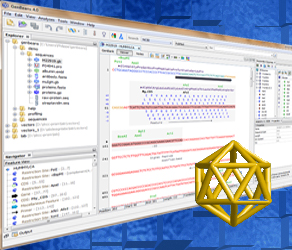 Try GenBeans: Best free software for DNA sequence editing!
FEEDBACK
Your comments & your suggestionsare appreciated. Please, notify us for resources and tools that you would like to see on this bench!
